The York Rite Explained: Freemasonry's Other Path
What is the York Rite? Discover the three bodies of the York Rite and how this branch of Masonry differs from the Scottish Rite.
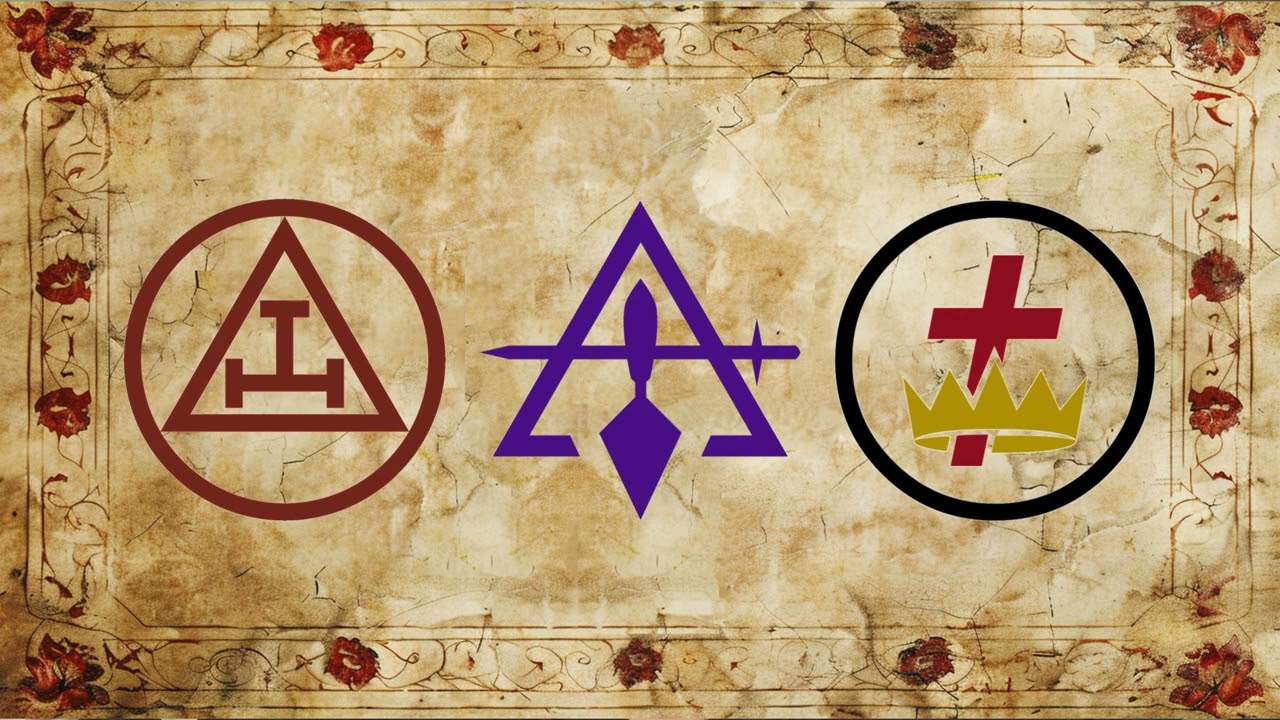
Alongside the Scottish Rite, the York Rite is one of the two main paths a Master Mason can follow to continue his Masonic education. It offers a distinctive series of degrees and orders grouped into three separate bodies. This guide explains what each body teaches, how to join, and how the York Rite differs from the Scottish Rite.
The Short Answer
The York Rite is a group of three cooperating Masonic bodies open to Master Masons: the Royal Arch Chapter, the Cryptic Council and the Commandery of Knights Templar. Together they confer ten degrees and orders. Membership is optional, and many Masons belong to both the York Rite and the Scottish Rite.
Why Is It Called the York Rite?
The name comes from an old Masonic legend. The medieval documents known as the Old Charges tell of an assembly of masons held at York, England, in the year 926 under Prince Edwin. Historians treat this as legend rather than documented fact, but the story gave the name York a special place in Masonic tradition. The term York Rite is mainly used in the United States; in England the Royal Arch is worked separately as the Holy Royal Arch.
A Different Structure
Unlike the Scottish Rite, which uses a continuous numbered sequence from the 4th to the 32nd degree, the York Rite is organized into three bodies, each with its own degrees, officers and national leadership. A Mason may join one, two or all three, progressing through them in order.
The Royal Arch Chapter
The first body is the Chapter of Royal Arch Masons, led locally by a High Priest. It confers four degrees:
Mark Master, which teaches the value of good work and honest wages.
Virtual Past Master, which in American practice prepares members for the duties of leadership.
Most Excellent Master, which celebrates the completion of King Solomon's Temple.
Royal Arch, which tells the story of the Temple's rebuilding.
The Royal Arch is often described as one of the most meaningful degrees in all of Freemasonry, because it completes the story begun in the Master Mason degree. Nationally, many chapters belong to the General Grand Chapter of Royal Arch Masons International, founded in the 1790s.
The Cryptic Council
The second body is the Council of Cryptic Masons, led locally by an Illustrious Master. Its three degrees are the Royal Master, the Select Master and the Super Excellent Master. The name comes from a crypt, or underground vault, that features in its symbolism. These degrees fill in parts of the Temple story that fall between the Master Mason and Royal Arch degrees, using themes of preservation and faithfulness. In some states the Council is optional; in others it is required before the Commandery.
The Commandery of Knights Templar
The third body is the Commandery of Knights Templar, led locally by an Eminent Commander. It confers three orders rather than degrees: the Order of the Red Cross, the Order of Malta and the Order of the Temple.
The Commandery is distinctly Christian in character, and membership generally requires a profession of the Christian faith. It draws inspiration from the ideals of the medieval crusading orders, emphasizing courage, honor and service, but it does not claim to descend from them. In the United States, Commanderies operate under the Grand Encampment of Knights Templar, founded in 1816.
How to Join the York Rite
The process is straightforward:
1. Become a Master Mason in a regular lodge. See how to join Freemasonry.
2. Petition a Royal Arch Chapter. Ask a York Rite member in your lodge, or contact the Grand Chapter in your state.
3. Receive the Chapter degrees, then continue to the Council and the Commandery if you wish.
Many jurisdictions hold one-day or weekend festivals where candidates can receive several degrees at once, while others confer each degree at a regular meeting. Fees and dues are set locally and vary widely.
York Rite Charities
Each body supports its own charitable work. The Royal Arch supports Royal Arch Research Assistance (RARA), which funds research into Central Auditory Processing Disorder, a condition affecting how the brain interprets sound. The Knights Templar Eye Foundation, created by the Grand Encampment, funds research and care to prevent blindness. These programs are part of the wider tradition of Masonic charity.
York Rite vs. Scottish Rite
This is one of the most common questions Master Masons ask. Here are the main differences:
Structure: the Scottish Rite is one body with numbered degrees (4th to 32nd); the York Rite is three separate bodies.
Number of degrees: the Scottish Rite has 29 degrees beyond the Blue Lodge plus the honorary 33rd; the York Rite has ten degrees and orders.
Religious requirement: both require belief in a Supreme Being, but the York Rite Commandery additionally requires a Christian profession.
Style: Scottish Rite degrees are often presented as staged plays watched by a class of candidates; York Rite degrees are often conferred on smaller groups with candidates taking part directly.
Highest honors: the Scottish Rite has the honorary 33rd degree; the York Rite has invitational bodies such as York Rite College and the Knight York Cross of Honour.
Neither rite is higher than the other, and neither outranks the Blue Lodge. There is no rivalry between them. For a full overview of every degree, see how many degrees are in Freemasonry.
Quick Answers
What are the three bodies of the York Rite? The Royal Arch Chapter, the Cryptic Council and the Commandery of Knights Templar.
How many degrees are in the York Rite? Ten: four Chapter degrees, three Council degrees and three Commandery orders.
Do you have to be Christian? Only for the Commandery of Knights Templar.
Can you join both rites? Yes. Many Masons belong to the York Rite and the Scottish Rite.
Is the York Rite higher than the Blue Lodge? No. The Master Mason degree remains the foundation of all Masonic membership.
Sources
- York Rite of Freemasonry information portal (yorkrite.org)
- General Grand Chapter of Royal Arch Masons International
- Grand Encampment of Knights Templar of the USA
Spotted an error? Let us know and we will review it.