
The History of Freemasonry
From the operative stonemasons who built Europe's greatest cathedrals to the speculative brotherhood that shaped nations — a journey spanning centuries.
Medieval Origins: The Operative Masons
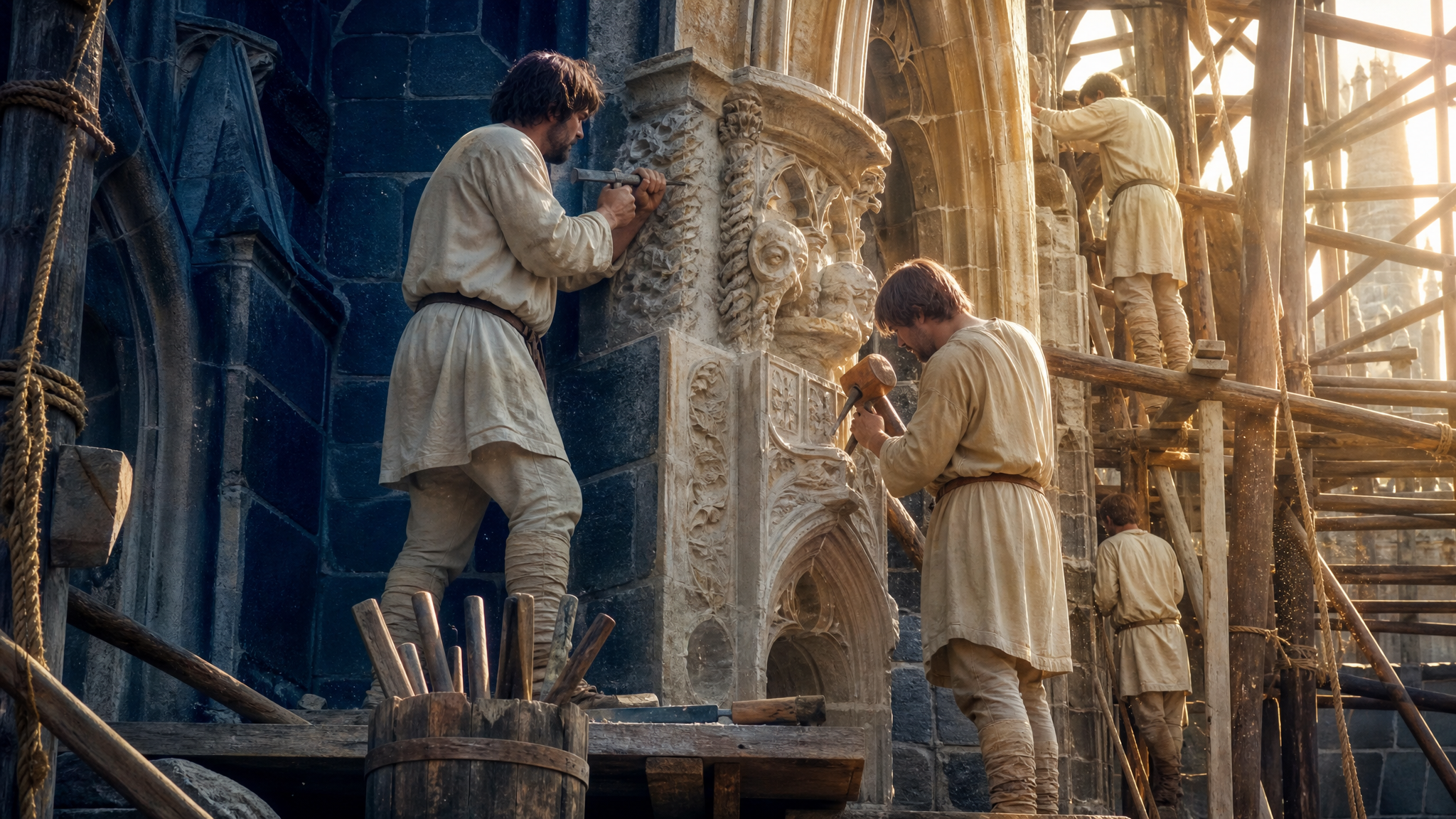
The roots of Freemasonry stretch back to the medieval stonemasons who built Europe's magnificent cathedrals, castles, and abbeys. These highly skilled craftsmen — known as "operative" masons — formed guilds to protect their trade secrets, regulate wages, and maintain quality standards.
Unlike most laborers of the era, stonemasons were free to travel between construction sites, earning them the name "free masons." They gathered in temporary shelters called "lodges" at construction sites, where they stored their tools and ate their meals. These lodges became the meeting places where masons passed down their knowledge through a system of signs, grips, and passwords — ensuring that only trained craftsmen could gain employment.
The oldest known Masonic document, the Regius Poem (circa 1390), sets out regulations for the craft and weaves a legendary history connecting stonemasons to ancient geometry and the building of King Solomon's Temple.
The Transition: From Operative to Speculative
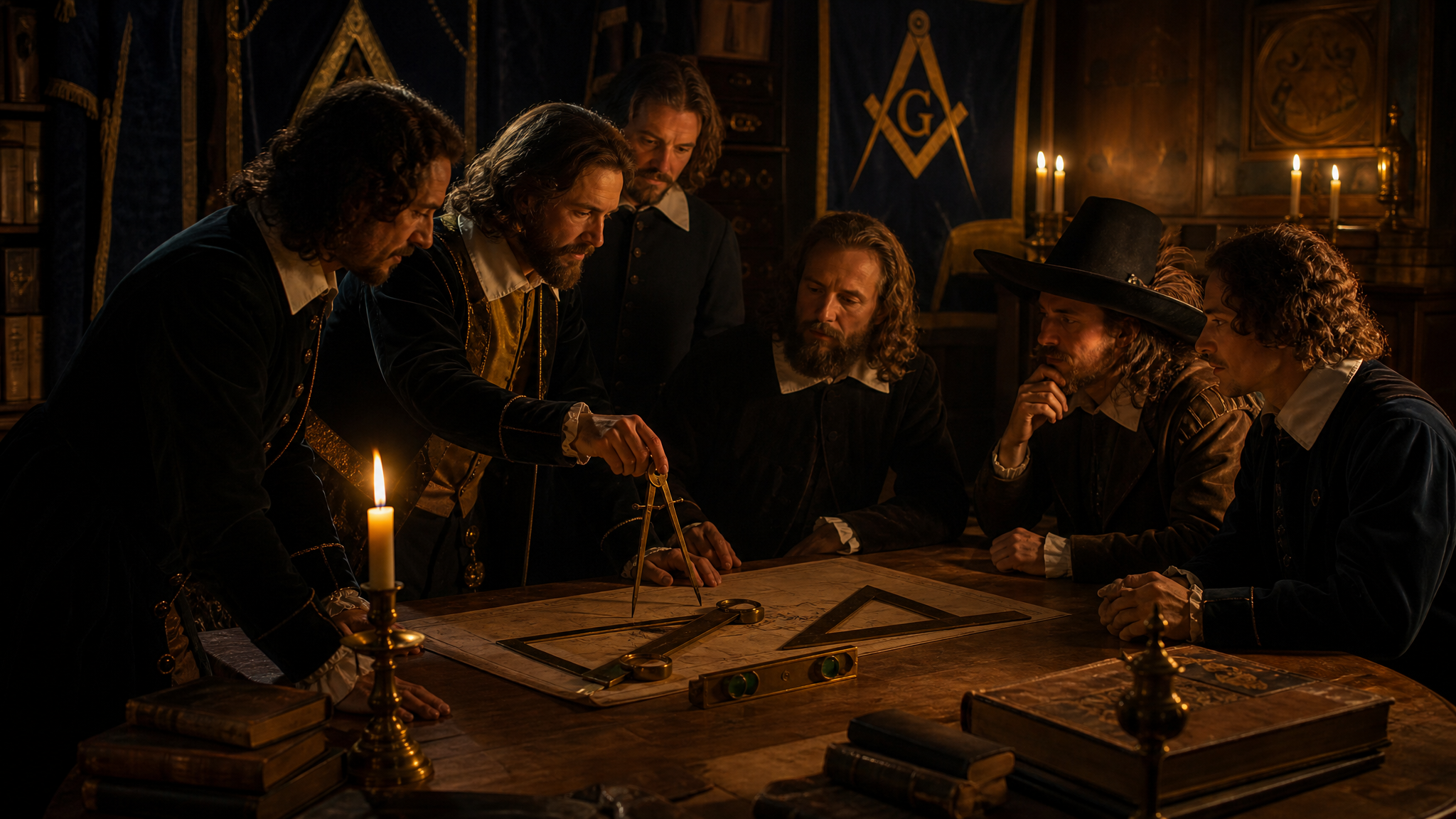
By the 16th and 17th centuries, the great age of cathedral building was waning. Masonic lodges began accepting members who were not working stonemasons — gentlemen, scholars, and intellectuals attracted to the fraternity's moral teachings, philosophical discussions, and tradition of mutual aid. These non-operative members were called "speculative" or "accepted" Masons.
Scotland provides the earliest evidence of this transition. The Lodge of Edinburgh (Mary's Chapel) No. 1 has continuous records dating back to 1599, and by the early 1600s, it was admitting non-operative members. In England, antiquary Elias Ashmole recorded his initiation in 1646, and by the late 1600s, several English lodges consisted primarily of speculative members.
The tools of the stonemason — the square, compass, level, plumb, and trowel — were gradually transformed into symbols of moral and philosophical principles. The square taught upright conduct, the compass defined the boundaries of behavior, and the level reminded brethren that all men are equal before God.
The Grand Lodge Era: 1717 and Beyond
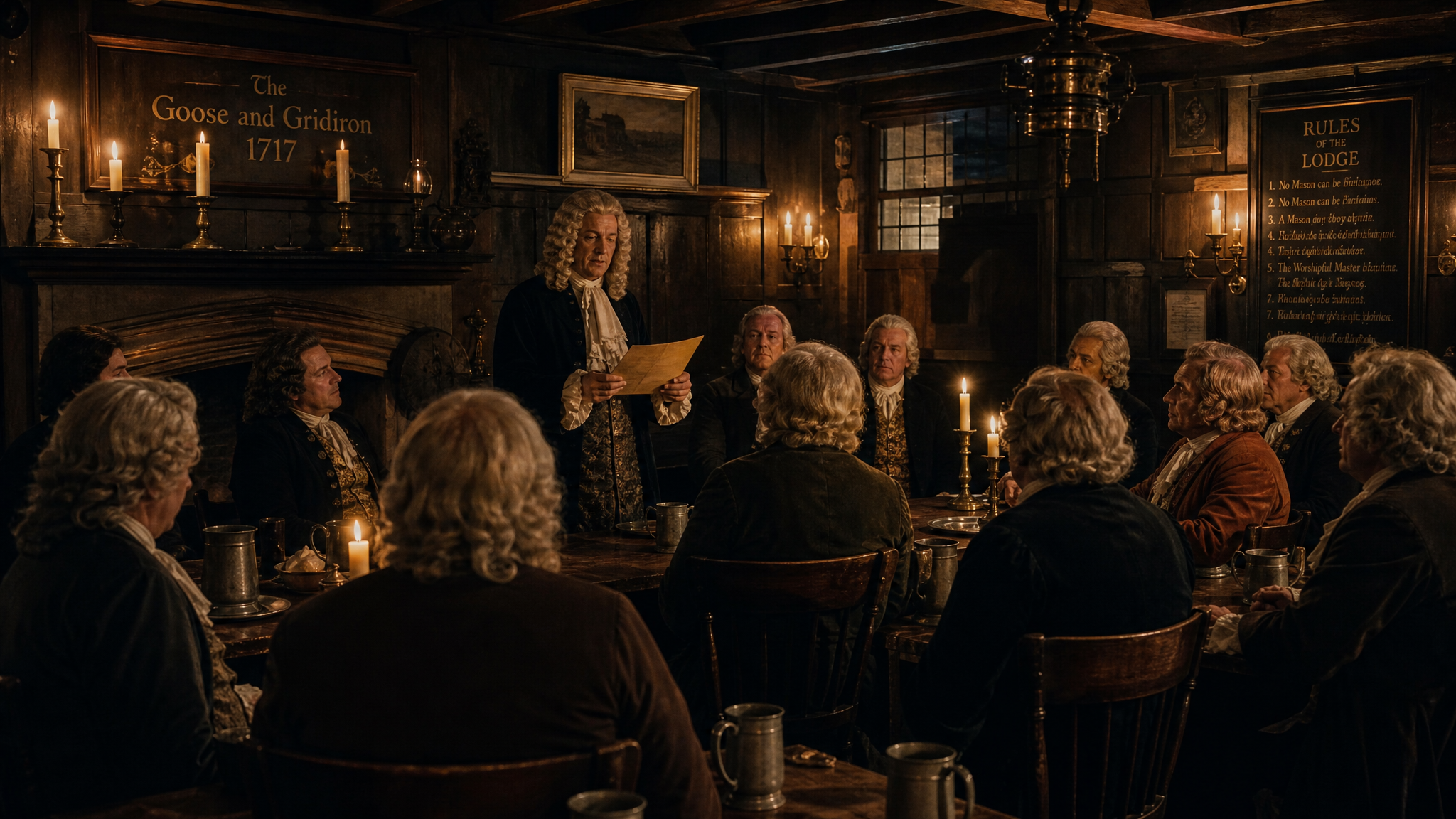
On June 24, 1717 — the feast of St. John the Baptist — representatives of four London lodges gathered at the Goose and Gridiron Ale House in St. Paul's Churchyard to form the Premier Grand Lodge of England. This was the pivotal moment that transformed Freemasonry from a collection of independent lodges into an organized fraternity with centralized governance.
The new Grand Lodge quickly set about codifying Masonic traditions. In 1723, Dr. James Anderson published "The Constitutions of the Free-Masons," which established the fundamental principles that still govern the Craft: belief in a Supreme Being, charity toward all, and the equality of all men within the lodge room.
Freemasonry spread rapidly across Europe and to the American colonies. By the 1730s, lodges were operating in Philadelphia, Boston, and other colonial cities. The fraternity attracted many of the leading minds of the Enlightenment era, who valued its emphasis on reason, tolerance, and universal brotherhood.
Freemasonry and the American Revolution
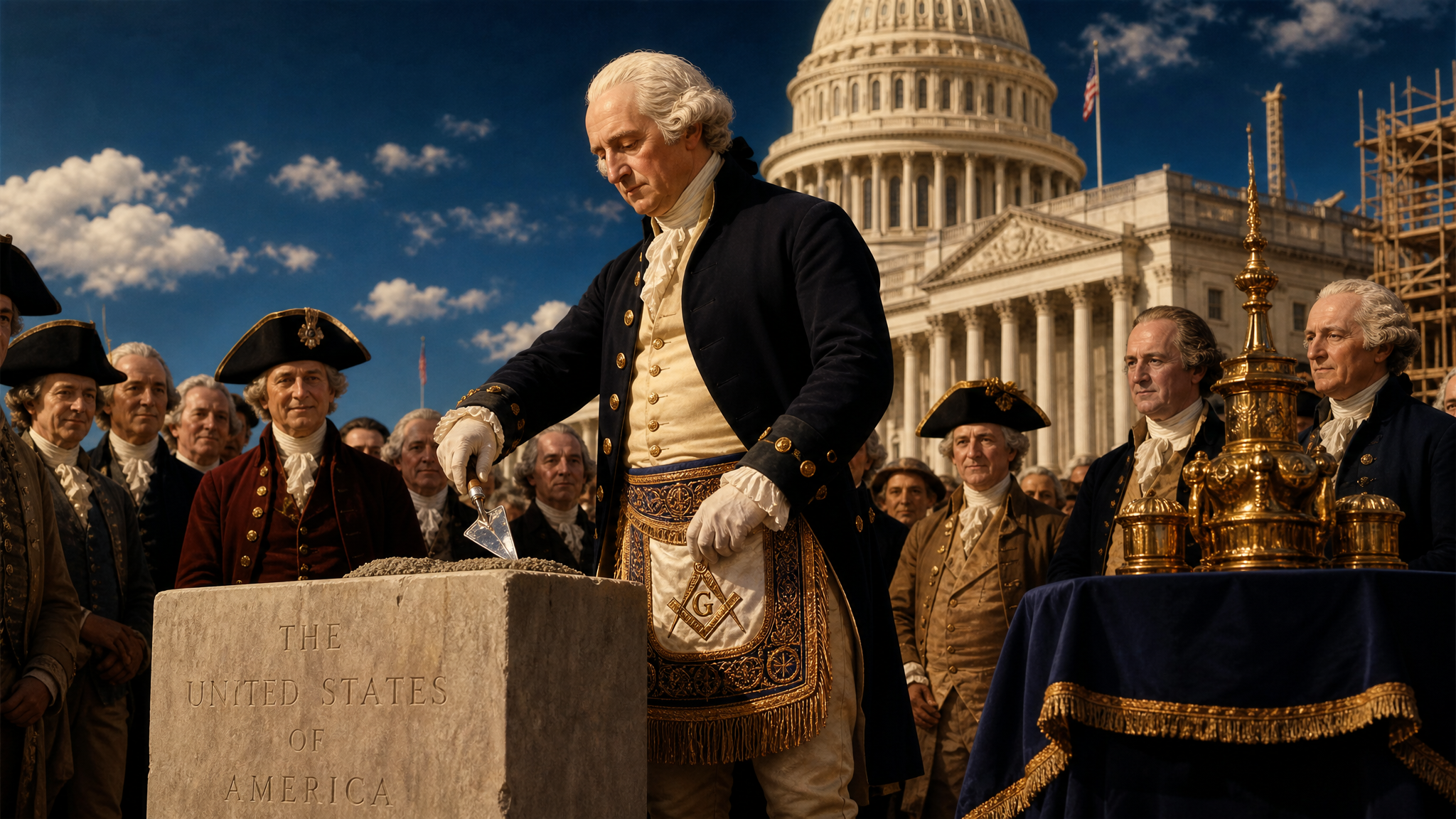
Freemasonry played a significant role in the founding of the United States. George Washington was initiated into Fredericksburg Lodge No. 4 in Virginia in 1752 and remained a devoted Mason throughout his life. He took his presidential oath of office on a Masonic Bible and laid the cornerstone of the U.S. Capitol in full Masonic regalia in 1793.
At least nine signers of the Declaration of Independence were Freemasons, including Benjamin Franklin, who served as Grand Master of Pennsylvania. The Marquis de Lafayette, the French hero of the American Revolution, was also a Mason. Masonic lodges served as meeting places where colonists could discuss ideas of liberty, equality, and self-governance — principles central to both Masonic philosophy and the American experiment.
The influence of Masonic ideals is visible in America's founding documents and national symbols. The emphasis on religious tolerance, democratic governance, and individual liberty aligns closely with the principles taught in Masonic lodges.
The Modern Fraternity
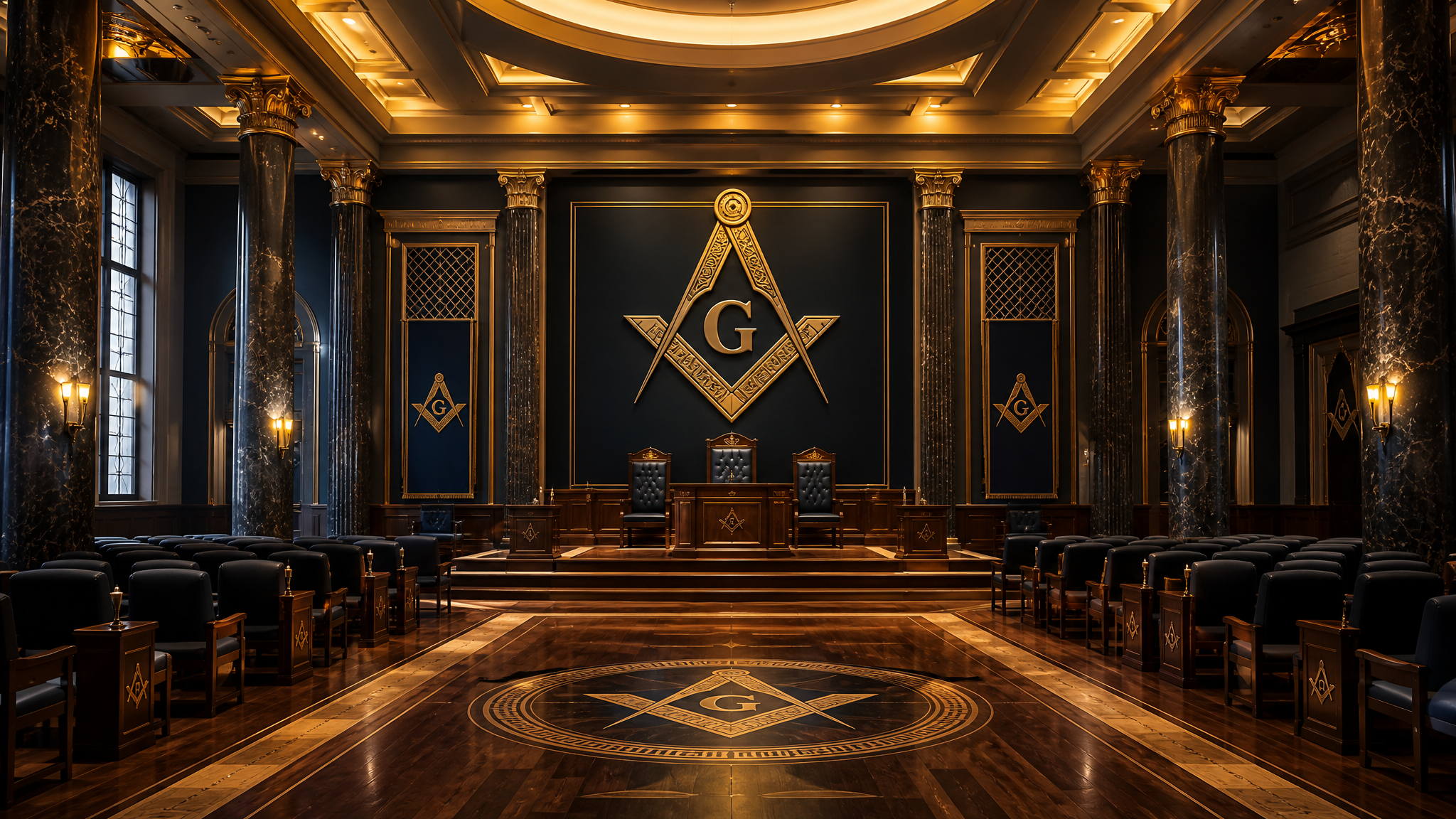
Today, Freemasonry remains the world's largest and oldest fraternal organization, with an estimated 6 million members across more than 160 countries. While membership has declined from its peak of over 4 million in the United States during the late 1950s, the fraternity has experienced renewed interest in recent decades as younger men seek meaningful community, personal development, and a connection to tradition.
Modern Freemasonry is divided into numerous Grand Lodges (each state in the US has its own), appendant bodies like the Scottish Rite and York Rite, and affiliated organizations including the Shriners (famous for their children's hospitals), the Order of the Eastern Star (open to women related to Master Masons), and youth groups like DeMolay International and Job's Daughters.
The fraternity continues to emphasize its core values of brotherly love, relief (charity), and truth, while contributing billions of dollars annually to charitable causes worldwide — making Freemasonry one of the largest charitable organizations on Earth.
Key Milestones
The Regius Poem
The oldest known Masonic document, also known as the Halliwell Manuscript, outlines regulations for stonemasons and establishes the legendary history connecting the Craft to ancient Egypt and King Athelstan of England.
Earliest Lodge Minutes
The Lodge of Edinburgh (Mary's Chapel) No. 1 records the earliest known lodge minutes in Scotland, providing the first documentary evidence of organized Masonic lodge meetings.
Elias Ashmole Initiated
English antiquary Elias Ashmole records being "made a Free Mason" in Warrington, one of the earliest known initiations of a non-operative (speculative) Mason in England.
The First Grand Lodge
Four London lodges unite at the Goose and Gridiron Ale House to form the Premier Grand Lodge of England — the world's first Grand Lodge. This pivotal moment transforms Freemasonry from a trade guild into a fraternal organization open to men of all backgrounds.
Anderson's Constitutions
Dr. James Anderson publishes "The Constitutions of the Free-Masons," codifying Masonic law, landmarks, and the legendary history of the Craft. It remains the foundational governance document for Freemasonry worldwide.
Freemasonry Comes to America
The first American lodges are established in Philadelphia and Boston. Benjamin Franklin publishes the first Masonic book in America in 1734 and later becomes Grand Master of Pennsylvania.
Papal Condemnation
Pope Clement XII issues the papal bull "In eminenti apostolatus," the first of several papal pronouncements against Freemasonry. The Catholic Church's stance sparks centuries of debate about Masonic compatibility with religion.
The Antients Grand Lodge
A rival Grand Lodge of the "Antients" (or "Ancients") forms in England, claiming to preserve older traditions. The original Grand Lodge becomes known as the "Moderns." The two would not reunite until 1813.
Masonic Founding Fathers
At least nine signers of the Declaration of Independence are Freemasons, including Benjamin Franklin and John Hancock. George Washington, initiated in 1752, becomes the most famous American Mason.
The United Grand Lodge of England
The two rival English Grand Lodges ("Antients" and "Moderns") unite to form the United Grand Lodge of England (UGLE), which remains the oldest and one of the most influential Grand Lodges in the world.
The Morgan Affair
Captain William Morgan, who threatened to publish Masonic secrets, disappears in New York. The scandal leads to the Anti-Masonic movement and the creation of the Anti-Masonic Party — the first American third party.
Prince Hall Freemasonry Grows
Prince Hall lodges, established for African American men since 1784 when Prince Hall was initiated in Boston, expand across the country. Prince Hall Grand Lodges are now recognized by many mainstream Grand Lodges worldwide.
Albert Pike's Morals and Dogma
Albert Pike publishes "Morals and Dogma of the Ancient and Accepted Scottish Rite of Freemasonry," a monumental philosophical work that becomes one of the most influential Masonic texts ever written.
The Shrine is Founded
The Ancient Arabic Order of the Nobles of the Mystic Shrine (Shriners) is founded in New York in 1870, with its first temple, Mecca, organized in 1872. Known for their distinctive fez hats and charitable work, they would go on to establish the world-renowned Shriners Hospitals for Children.
Bicentennial Celebrations
Freemasonry celebrates 200 years since the formation of the first Grand Lodge. By this time, membership in the United States has reached over 2 million, and Masonic temples are prominent landmarks in cities across America.
Peak US Membership
Freemasonry in the United States reaches its all-time peak of over 4.1 million members. Every American town seems to have a Masonic lodge, and membership is considered a mark of respectability and civic engagement.
Masonic Flag on the Moon
Astronaut Buzz Aldrin, a member of Clear Lake Lodge No. 1417 in Texas, carries a Scottish Rite flag with him to the lunar surface during the Apollo 11 mission, later presenting it to the Supreme Council in Washington, D.C.
Tercentenary
The United Grand Lodge of England celebrates 300 years since the founding of the first Grand Lodge. A special service at the Royal Albert Hall draws 4,000 Freemasons from around the world, broadcast live to millions.
Modern Freemasonry
With an estimated 6 million members worldwide across more than 160 countries, Freemasonry remains the world's largest and oldest fraternal organization. Modern lodges focus on charitable work, personal development, and brotherhood while preserving centuries-old traditions.
How Well Do You Know Masonic History?
From 1717 to Prince Hall, put your knowledge to the test in the Masonic Trivia Challenge.
Download: The Beginner's Guide to Freemasonry
Get our free, in-depth guide covering everything you need to know about Freemasonry — delivered straight to your inbox.