Masonic Charity: How Freemasons Give Back
Freemasons are one of the largest charitable organizations in the world, contributing billions of dollars annually. Discover how Masonic charity works and who it helps.
When most people think of Freemasonry, they think of secret handshakes and ancient rituals. What they often don't know is that Freemasons are among the most generous charitable organizations in the world, with a frequently cited estimate of more than $2 million given every day across North America.
Shriners Hospitals for Children
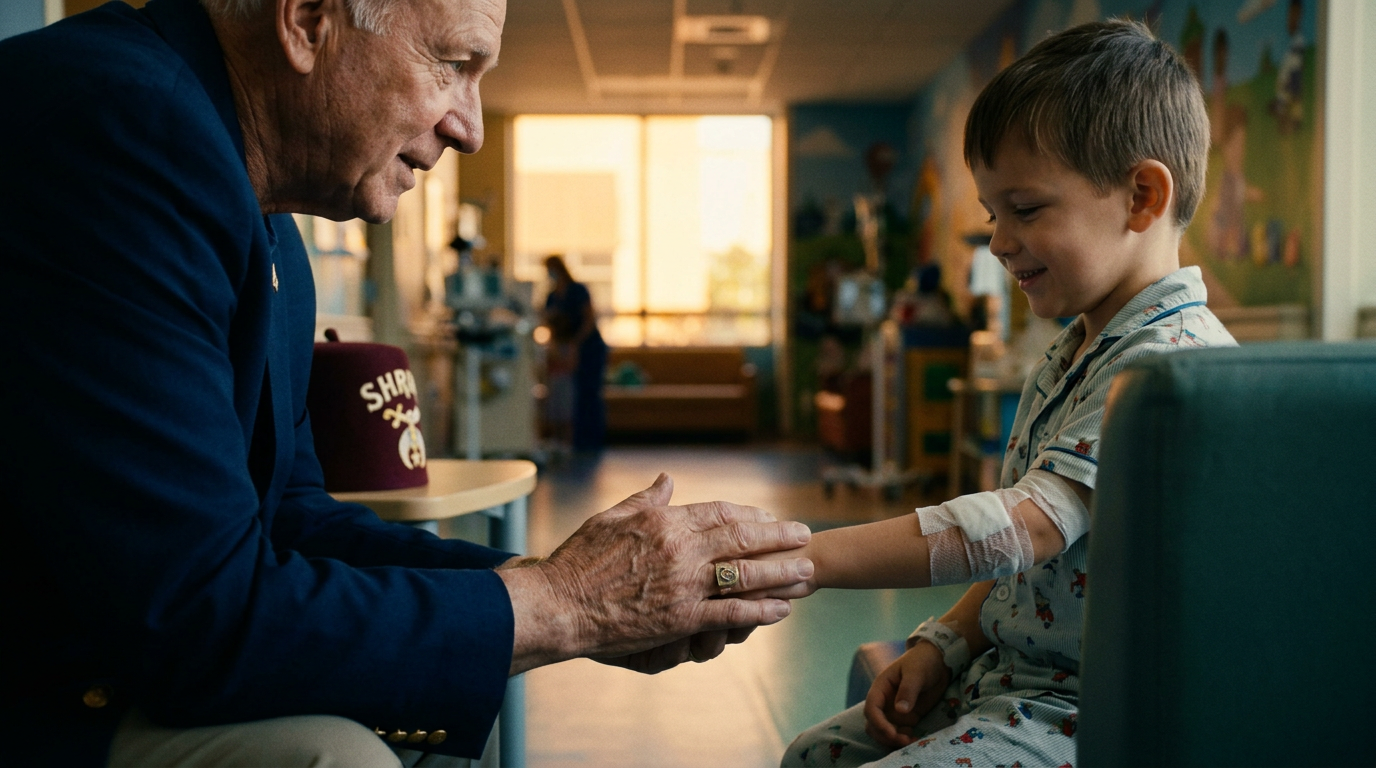
Perhaps the most visible example of Masonic charity, Shriners Hospitals for Children is a network of 22 medical facilities across North America (as of 2025) that provide care to children regardless of their family's ability to pay. Specializing in orthopedic care, burn treatment, spinal cord injuries, and cleft lip and palate repair, the system has cared for well over a million children since the first hospital opened in 1922.
The hospitals are supported by an endowment and by donations from Shriners and the public; since 2011 they have also billed insurance where families have it, while still treating children whose families cannot pay.
Scottish Rite Learning Centers
The Scottish Rite of Freemasonry supports free programs for children with speech, language, and reading difficulties — including the Children's Dyslexia Centers in the Northern Jurisdiction and the RiteCare clinics in the Southern Jurisdiction. Staffed by trained tutors and clinicians, these programs have helped many thousands of children over the decades.
Masonic Student Aid
State Grand Lodges across the United States collectively award millions of dollars in scholarships to students each year. Masonic charities outside the U.S., such as the Masonic Foundation of Ontario, run similar bursary programs.
Community Support
At the local level, Masonic lodges are deeply embedded in their communities:
Disaster relief: Masonic lodges frequently mobilize to provide food, shelter, and financial assistance after natural disasters.
Blood drives: Many lodges host regular blood drives in partnership with the Red Cross.
Food banks: Lodges operate food pantries and contribute to local food banks.
Youth programs: DeMolay International, Job's Daughters, and Rainbow Girls provide leadership development for young people.
Senior care: Many Grand Lodges operate retirement homes and assisted living facilities for elderly Masons and their families.
The Masonic Home
Several states maintain Masonic Homes — retirement communities that provide housing, healthcare, and social activities for aging Masons, their wives, and widows. The Masonic Homes of California, for example, is a sprawling campus that provides everything from independent living apartments to full skilled nursing care.
The Principle of Relief
Charity is not an afterthought in Freemasonry — it is one of the three principal tenets of the fraternity, alongside Brotherly Love and Truth. Every Mason takes obligations that include helping a brother in need and contributing to the relief of distress.
The beauty of Masonic charity is its quiet, persistent nature. Most Masonic giving happens without fanfare, without press releases, and without expectation of recognition. As Masons like to say: "We are not a secret society, but a society with secrets — and our greatest secret might be just how much good we do."
By the Numbers
$2 million+ per day: a frequently cited estimate of Masonic giving across North America
22 Shriners Hospitals (as of 2025) caring for children regardless of ability to pay
Scottish Rite children's programs for speech, language, and dyslexia support
Well over a million children cared for by Shriners Hospitals since 1922
Figures vary by source and year. Numbers like these make Freemasonry one of the largest charitable organizations in the world — a fact that rarely makes headlines but profoundly impacts millions of lives every year.