Benjamin Franklin: Founding Father and Freemason
Benjamin Franklin was one of America's most famous Freemasons. Explore his Masonic career and how the fraternity shaped his public life.
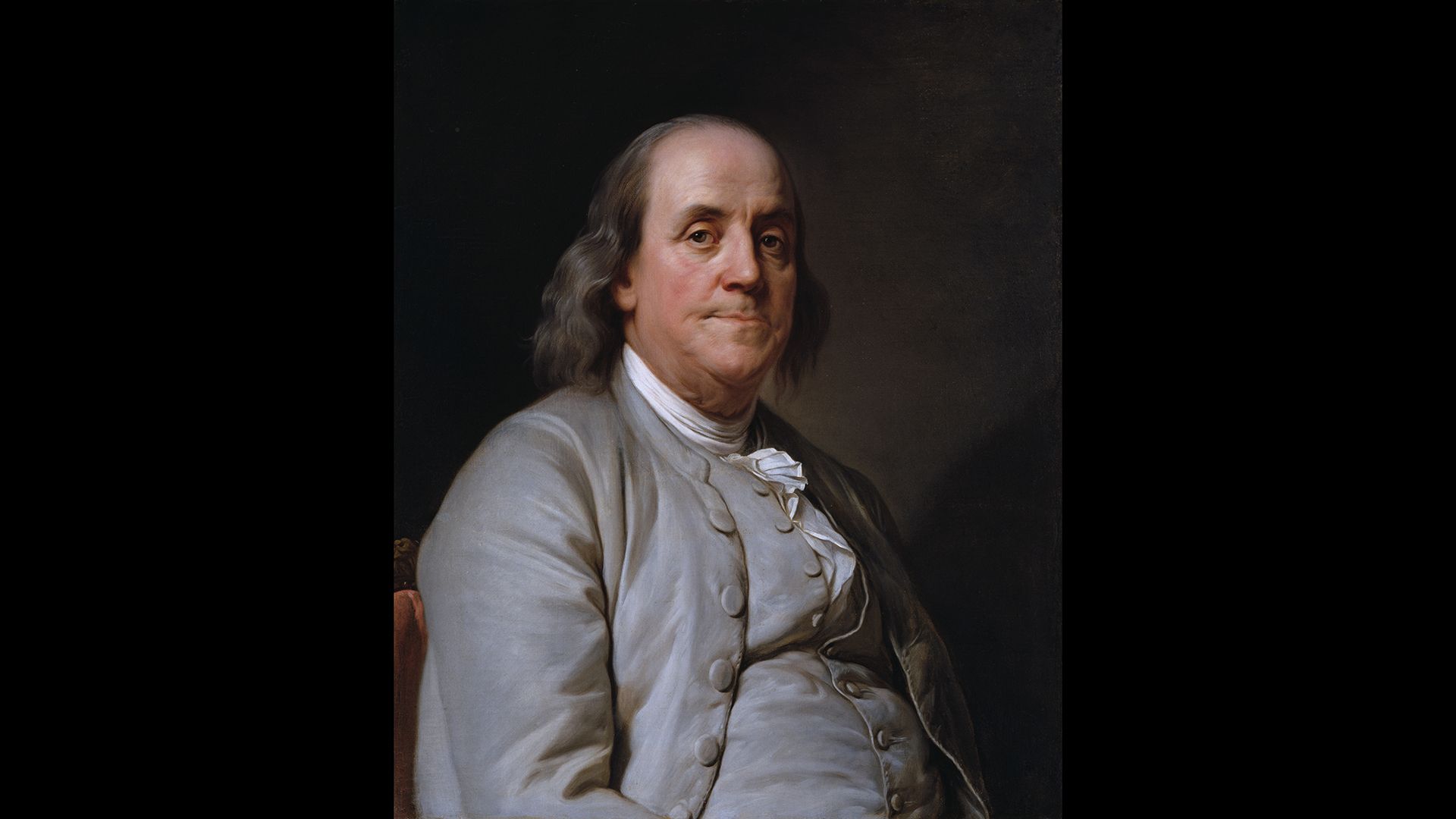
Benjamin Franklin — printer, scientist, inventor, diplomat, and Founding Father — was also one of the most active Freemasons of the colonial era. His Masonic career lasted almost sixty years, ran from a small Philadelphia tavern lodge to one of the most celebrated lodges in Paris, and shows how closely the fraternity was tied to the people and ideas of the founding generation.
Initiation at St. John's Lodge (1731)
Franklin was initiated in February 1731 at St. John's Lodge in Philadelphia, one of the earliest Masonic lodges in the American colonies. He was 25 years old and still building his reputation as a printer and newspaper publisher.
He threw himself into lodge life almost immediately. Lodge records show he helped draft its by-laws in 1732 and served as its Secretary from 1735 to 1738. For a young tradesman, the lodge offered something valuable: a regular meeting place where merchants, craftsmen, and civic leaders sat together as equals. If you are new to how lodges are organized, our guide to what goes on in a lodge meeting explains the basics.
Grand Master at 28
In 1734, only three years after his initiation, Franklin was elected Grand Master of Pennsylvania, the highest Masonic office in the province. He was 28. He later served as Provincial Grand Master of Pennsylvania in 1749, a position that gave him oversight of the lodges there.
That rapid rise says as much about Franklin as it does about the fraternity. He was energetic, well connected, and already known for organizing people around shared projects, all qualities lodges valued in their leaders.
The First Masonic Book Printed in America
Also in 1734, Franklin used his own press to reprint James Anderson's Constitutions of the Free-Masons, the rulebook and traditional history first published in London in 1723. Franklin's edition is recognized as the first Masonic book printed in the Americas.
The decision was both fraternal and practical. Lodges in the colonies needed a shared set of rules, and Franklin, as a printer, could supply them. It also put him at the center of how Freemasonry was understood in the New World.
The Lodge of the Nine Sisters in Paris
Franklin's most famous Masonic chapter came late in life. In 1776, the Loge des Neuf Sœurs (Lodge of the Nine Sisters) was founded in Paris under the Grand Orient de France. Named after the nine Muses of Greek mythology, it drew writers, scientists, artists, and philosophers, and it became one of the leading gathering places of the French Enlightenment.
Franklin arrived in France as an American envoy seeking support for the Revolution, and in 1778 he affiliated with the Nine Sisters. That year produced one of the most remarkable moments in Masonic history:
On April 7, 1778, Franklin assisted at the initiation of the philosopher Voltaire into the lodge.
Voltaire died only weeks later, and Franklin took part in the lodge's Masonic memorial in his honor.
From 1779 to 1781, Franklin served as Venerable Master (the French equivalent of Worshipful Master) of the Nine Sisters.
To learn what a Master's duties involve, see our article on the Worshipful Master and lodge officers.
Did Freemasonry Help Win the Revolution?
It is tempting to say that Masonic connections won French support for the United States, but the honest answer is more modest. The alliance with France was the product of diplomacy, military events, and French strategic interests. What Freemasonry gave Franklin was access. Through the Nine Sisters he moved easily among the intellectuals, nobles, and public figures who shaped French opinion, and that network helped him make the American case in person.
In other words, the lodge was a place where Franklin built relationships, not a secret engine of foreign policy. That distinction matters, because exaggerated claims about Masonic influence feed the same conspiracy theories the historical record does not support.
Franklin's Values and the Craft
Franklin's lifelong habits line up naturally with Masonic teaching about self-improvement, charity, and civic duty. Over his career he helped launch:
The Junto, a club for mutual improvement founded in 1727
The Library Company of Philadelphia, a subscription library founded in 1731
The Union Fire Company, a volunteer fire brigade founded in 1736
The Pennsylvania Hospital, founded in 1751
These projects were not Masonic undertakings, and it would be wrong to credit them to the lodge. But they reflect the same conviction Freemasonry tries to instill: that a good man improves himself and then puts that improvement to work for his community. Masonic charity today follows the same idea, as our article on Masonic charity work shows.
A Mason for Almost Sixty Years
Franklin remained a Freemason from 1731 until his death in Philadelphia on April 17, 1790. Few Masons of his era were members longer, and almost none were as visible. He belonged to lodges on two continents, held the highest office in his province, printed the fraternity's rulebook, and helped receive one of Europe's most famous writers into the Craft.
He was also far from the only founder in a lodge. George Washington and many others of that generation were Masons too, as our list of presidents who were Freemasons shows, and you can find more notable members on our Famous Freemasons page.
Common Questions
Was Benjamin Franklin really a Freemason?
Yes. His membership is documented in lodge records in Philadelphia and Paris, and in the Masonic book he printed in 1734. It is one of the best-documented memberships of any Founding Father.
What was Franklin's highest Masonic office?
He was elected Grand Master of Pennsylvania in 1734 and later served as Provincial Grand Master. In Paris he was Venerable Master of the Lodge of the Nine Sisters.
Did Franklin initiate Voltaire?
Franklin assisted at Voltaire's initiation into the Lodge of the Nine Sisters on April 7, 1778. Voltaire died a few weeks later.
Quick Facts
Franklin was initiated at St. John's Lodge, Philadelphia, in February 1731.
He was elected Grand Master of Pennsylvania in 1734, at age 28.
In 1734 he printed the first Masonic book in the Americas, Anderson's Constitutions.
He joined the Lodge of the Nine Sisters in Paris in 1778 and led it from 1779 to 1781.
He assisted at Voltaire's initiation on April 7, 1778.
He remained a Mason until his death on April 17, 1790.
Sources
- Scottish Rite NMJ: Ben Franklin and the Lodge of the Nine Sisters
- Craftsmen Online: Benjamin Franklin's Masonic career
Spotted an error? Let us know and we will review it.