14 US Presidents Who Were Freemasons
From George Washington to Gerald Ford, discover the 14 American Presidents who were members of the Masonic fraternity and how their membership shaped their leadership.
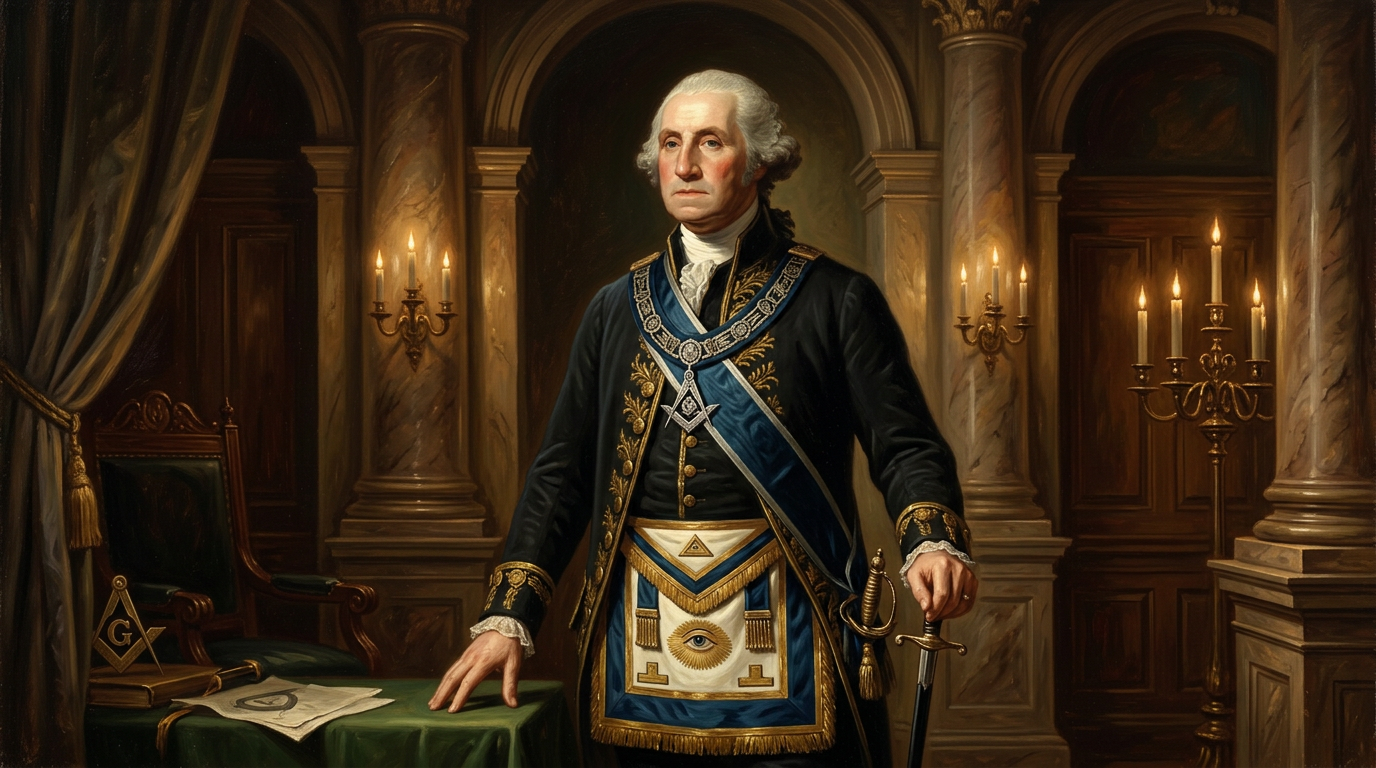
Of the 45 men who have served as President of the United States, 14 have been confirmed Freemasons — nearly one in three. From the first President, George Washington, to the 38th, Gerald Ford, Freemasonry has been a thread woven through the fabric of American presidential history.
George Washington (1789–1797)
The Father of His Country was initiated into Fredericksburg Lodge No. 4 in Virginia on November 4, 1752, at the age of 20. Washington remained a devoted Mason throughout his life, and on September 18, 1793, he laid the cornerstone of the United States Capitol building wearing his Masonic apron and using Masonic ceremony. His apron, which Masonic tradition holds was embroidered by Madame Lafayette, is now one of the most treasured artifacts in Masonic history.
James Monroe (1817–1825)
The fifth President was initiated in Williamsburg Lodge No. 6 in Virginia in 1775, during the early days of the American Revolution. Monroe's Masonic brotherhood with other Founding Fathers helped forge the bonds that held the young nation together.
Andrew Jackson (1829–1837)
Old Hickory was not only a Mason but served as Grand Master of the Grand Lodge of Tennessee from 1822 to 1824. He was a passionate defender of the fraternity during the Anti-Masonic movement of the 1820s and 1830s.
James K. Polk (1845–1849)
Polk was initiated in Columbia Lodge No. 31 in Tennessee in 1820. He presided over one of the most consequential presidencies in terms of territorial expansion.
James Buchanan (1857–1861)
Buchanan was initiated in Lodge No. 43 in Lancaster, Pennsylvania, in 1817 and served as Master of his lodge. He was also the Junior Warden and was deeply involved in lodge activities.
Andrew Johnson (1865–1869)
Lincoln's successor was initiated in Greeneville Lodge No. 119 in Tennessee. During the Civil War, he remained loyal to the Union even though his home state of Tennessee had seceded — a decision that may have been influenced by his Masonic principles of loyalty and brotherhood that transcended political divisions.
James A. Garfield (1881)
Garfield received his Masonic degrees in Magnolia Lodge No. 20 in Columbus, Ohio, in 1864, while serving as a Union Army general during the Civil War. His presidency was cut tragically short by assassination.
William McKinley (1897–1901)
McKinley was initiated in Hiram Lodge No. 21 in Winchester, Virginia, in 1865. He went on to become a charter member of Canton Lodge No. 60 in Ohio.
Theodore Roosevelt (1901–1909)
The energetic 26th President joined Freemasonry relatively late, being initiated in Matinecock Lodge No. 806 in Oyster Bay, New York, on January 2, 1901 — while already serving as Vice President.
William Howard Taft (1909–1913)
Taft was made a Mason "at sight" (a rare honor) by the Grand Master of Ohio in 1909, shortly after his inauguration as President. He later became Chief Justice of the Supreme Court.
Warren G. Harding (1921–1923)
Harding was initiated in Marion Lodge No. 70 in Ohio on June 28, 1901, but objections within his lodge stalled his progress for 19 years. He was finally raised to Master Mason on August 27, 1920, while serving as a United States Senator.
Franklin D. Roosevelt (1933–1945)
FDR was initiated in Holland Lodge No. 8 in New York City in 1911. He was also a 32° Scottish Rite Mason and a member of the Shrine. As President, he ordered the Great Seal placed on the dollar bill in 1935.
Harry S. Truman (1945–1953)
Truman was perhaps the most devoted Mason ever to hold the presidency. Initiated in Belton Lodge No. 450 in Missouri in 1909, he rose to serve as Grand Master of Missouri from 1940 to 1941. He received the 33° of the Scottish Rite in 1945 and remained active in Masonry until his death. "The greatest honor that has ever come to me," Truman once said, "was to be Grand Master of Masons in Missouri."
Gerald Ford (1974–1977)
The last confirmed Masonic President was initiated in Malta Lodge No. 465 in Grand Rapids, Michigan, on September 30, 1949. He was passed and raised in 1951 at Columbia Lodge No. 3 in Washington, D.C., as a courtesy for his home lodge. He received the 33° Scottish Rite in 1962 and was named Honorary Grand Master of DeMolay International in 1975.
A Lasting Legacy
While no President since Gerald Ford has been a confirmed Freemason, the fraternity's influence on American governance is undeniable. The Masonic principles of liberty, equality, and the rule of law are woven into the very fabric of the American republic.