Freemasonry Around the World: A Truly Global Brotherhood
How widespread is Freemasonry? Explore how the Craft is organized across different countries and what unites Masons around the world.
Freemasonry is a global phenomenon, with millions of members spread across nearly every country on earth. But it is not a single worldwide organization with one leader. Understanding how the Craft is structured internationally reveals a great deal about its values of independence and brotherhood.
No Single World Headquarters
Contrary to popular belief, there is no global "head" of Freemasonry and no single grand leader who rules over all Masons. Instead, Freemasonry is organized into independent Grand Lodges, each sovereign within its own territory — usually a country or, in the United States, an individual state. Each Grand Lodge governs the lodges under its authority.
The Concept of Recognition
Because Grand Lodges are independent, they maintain relationships through a system called recognition. When two Grand Lodges recognize each other, their members may visit one another's lodges and consider themselves brothers. Grand Lodges generally require certain standards for recognition, such as belief in a Supreme Being and adherence to long-established Masonic landmarks.
Regular and Other Traditions
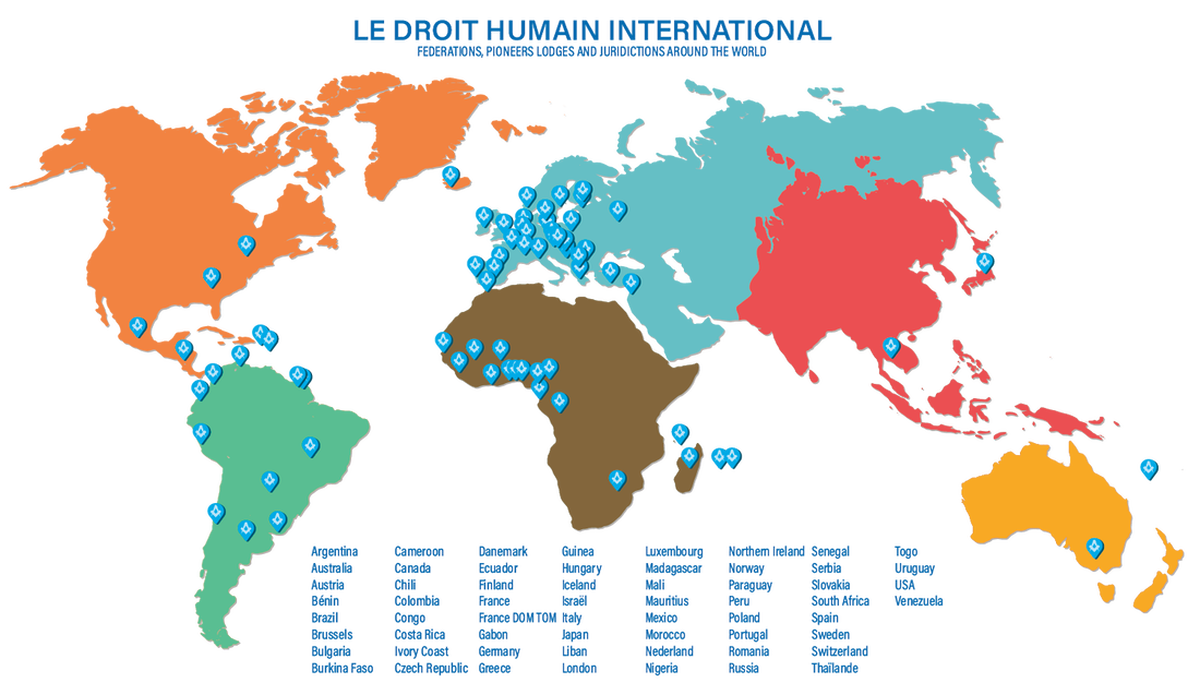
Masonic bodies that meet the traditional standards are described as "regular." The United Grand Lodge of England, formed in 1813, is often regarded as a historical benchmark for regularity. Some other Masonic traditions around the world, such as certain continental European bodies, operate differently and may not be recognized by regular Grand Lodges, illustrating the diversity within the broader Masonic family.
Shared Principles Everywhere
Despite differences in language, culture, and custom, regular Masons around the world share the same core principles: brotherly love, relief (charity), and truth. A Mason from one country visiting a recognized lodge in another will find familiar symbols, values, and a warm welcome, even if the ceremony is conducted in a different language.
A Bridge Between Cultures
Throughout history, Freemasonry has served as a meeting ground for people of different nationalities and faiths. Its insistence that members set aside political and religious dispute within the lodge has made it a rare space where individuals from very different backgrounds can gather as equals.
Unity Without Uniformity
The global structure of Freemasonry reflects one of its deepest ideas: that people can be united by shared values while remaining independent and self-governing. Millions of members, thousands of lodges, hundreds of Grand Lodges — all bound not by a central authority, but by a common commitment to building better people and a better world.